
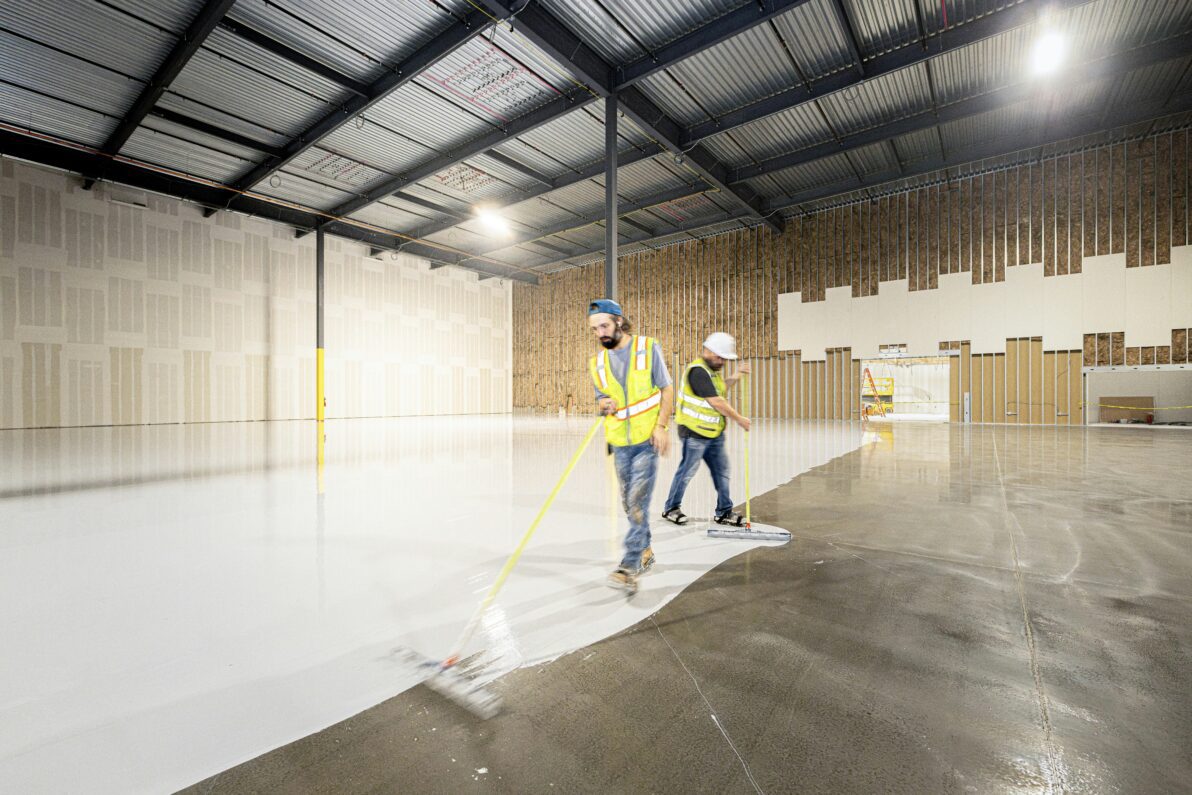
What is polyaspartic floor coating?
Polyaspartic floor coating is the premium choice for Florida garages and commercial floors — UV-stable, incredibly durable, and cured in a fraction of the time of epoxy. Here’s what polyaspartic is, how it compares to epoxy, and where it’s worth the upgrade.
The key difference from standard epoxy is how it cures. Polyaspartic uses a moisture-tolerant, fast-curing chemistry that is not sensitive to temperature extremes. It cures in hours rather than days, is UV-stable from the moment it is applied, and does not yellow or chalk when exposed to sunlight — a critical advantage in Florida garages that receive direct sun.
Most professional polyaspartic systems include three components: a polyaspartic base coat applied directly over diamond-ground concrete, a decorative broadcast layer of colour flake or quartz aggregate, and a clear polyaspartic topcoat that seals everything and creates the final finish. The result is a floor that looks like a high-end showroom and holds up like an industrial surface.
How does polyaspartic compare to epoxy?
Polyaspartic outperforms standard epoxy in four key areas: cure time, UV stability, temperature resistance, and long-term durability. That is the short answer. The longer answer involves understanding where each coating fits.
Standard two-part epoxy is an excellent coating. Applied with proper surface prep, a professional epoxy system lasts 8–12 years and handles normal residential garage use well. Its weakness is UV exposure. Standard epoxy yellows and chalks when hit with direct sunlight over time. A polyurethane or polyaspartic topcoat over epoxy solves this, but that combination effectively becomes a hybrid system — and costs almost as much as a full polyaspartic install.
Polyaspartic does not need UV protection added on top. It is inherently UV-stable. It also handles hot tyre pickup — a specific Florida problem where hot tyres fresh off the road sit on a warm floor and pull the coating when the car moves. Standard epoxy without a robust topcoat is vulnerable to this. Polyaspartic is not. For a full comparison, see our post on Epoxy vs Polyaspartic: Which Lasts Longer?.
How long does polyaspartic floor coating last?
Polyaspartic floor coating lasts 15–20 years with professional installation and normal residential use. That is the realistic lifespan for a correctly installed system on a properly prepared slab.
The two variables that determine where in that range your floor lands are surface preparation and traffic load. A floor that receives daily vehicle traffic, seasonal temperature swings, and frequent chemical exposure — oil, brake fluid, cleaning products — will age faster than a lightly used hobby garage. But even under heavy residential use, a polyaspartic system consistently outperforms standard epoxy by 5–8 years.
Surface preparation is non-negotiable. Diamond grinding opens the concrete pores and creates a mechanical bond for the coating. Without it, no coating bonds reliably — polyaspartic included. A poorly prepped slab can fail within 2–3 years regardless of product quality. This is the single most important reason to choose a professional installer over a DIY kit.
Polyaspartic is a long-term investment, and the right installation makes all the difference. At Clever Coatings, we use a full diamond-grind prep process, a premium polyaspartic base, and a broadcast flake system that handles Florida heat, UV, and daily vehicle traffic.
Ready to see what it looks like on your floor? Visit our Residential Coatings page, or get a free quote — we will come take a look and walk you through the options. Call us on (407) 489-5256.
How much does polyaspartic floor coating cost?
Polyaspartic floor coating costs between $5 and $14 per square foot professionally installed. A one-car garage (400–500 sq ft) typically runs $2,000–$5,500. A two-car garage (500–800 sq ft) runs $3,000–$8,000. The range reflects differences in slab condition, coating thickness, and the decorative system used.
That is more than a standard single-coat epoxy system, which starts at around $3–$6 per square foot. But the cost-per-year comparison changes the picture. A polyaspartic system at $5,000 lasting 18 years works out to approximately $278 per year. An epoxy system at $3,000 lasting 10 years works out to $300 per year — and requires a full strip and recoat sooner.
DIY polyaspartic kits exist, but they use lower-solid formulations designed for consumer application. Professional-grade polyaspartic has significantly higher solids content, requires specialised mixing and application equipment, and must be applied within a narrow pot life window. Getting it wrong on a fast-curing system can mean a full strip and redo.
Is polyaspartic floor coating worth it for a residential garage?
Yes — polyaspartic floor coating is worth it for most residential garages, particularly in Florida. UV exposure, thermal cycling, hot tyres, humidity, and heavy use all accelerate the wear of cheaper coating systems. Polyaspartic handles every one of those conditions without compromise.
The homeowners who get the most value from polyaspartic are those who plan to stay in the property for more than five years, use their garage regularly, and want a finish that looks and performs like a professional installation for its full lifespan. It is not the right choice for someone who wants the cheapest possible floor covering they will replace in three years.
If budget is a constraint, a professional two-part epoxy system with a polyaspartic topcoat is a credible alternative that delivers most of the durability at a lower upfront cost. Before deciding, it is worth getting a quote for both systems and comparing total cost over ten years. See our post on DIY Garage Floor Kit vs Professional for more on that decision.
Why Polyaspartic Works Well in Florida’s Climate
Florida’s heat, intense sunlight, and humidity create challenges for floor coatings. Polyaspartic coatings perform well because they offer strong UV resistance, helping prevent fading and yellowing, while also handling temperature changes and moisture exposure better than many traditional coatings.
Commercial vs Residential Uses
Residential: Ideal for garages, driveways, patios, and pool decks where appearance and long-term protection matter.
Commercial: Works well in warehouses, retail spaces, showrooms, and service areas that experience frequent foot traffic, vehicle movement, and daily wear.
Why the Higher Cost Is Worth It
While polyaspartic coatings generally cost more upfront, the value comes from longer lifespan, lower maintenance needs, faster installation, and stronger resistance to wear and sun damage. For high-traffic areas or floors exposed to direct sunlight, the reduced need for repairs and replacements can make the investment more cost-effective over time.
Frequently Asked Questions About Polyaspartic Floor Coating
| Q1: What is polyaspartic floor coating? |
| Polyaspartic floor coating is a fast-curing, aliphatic polyurea-based coating applied directly over concrete. It bonds to the slab, resists UV yellowing, handles extreme temperatures, and is typically walkable within 4–6 hours of application. It is one of the most durable residential and commercial floor coating systems available. |
| Q2: How long does polyaspartic floor coating last? |
| Professionally installed polyaspartic floor coating lasts 15–20 years with normal residential use. It outperforms standard epoxy in UV stability, thermal cycling resistance, and surface hardness. Regular cleaning and avoiding prolonged chemical exposure preserves the finish for the full lifespan of the system. |
| Q3: How much does polyaspartic floor coating cost? |
| Polyaspartic floor coating costs between $5 and $14 per square foot professionally installed. A standard one-car garage (400–500 sq ft) typically runs $2,000–$5,500 depending on surface condition, coating thickness, and the decorative broadcast system used. It costs more than standard epoxy but lasts significantly longer. |
| Q4: Can polyaspartic floor coating be applied in one day? |
| Yes. Polyaspartic floor coating is typically applied and finished in a single day. It cures faster than epoxy — most systems are walkable in 4–6 hours and ready for vehicle traffic within 24 hours. This makes it the preferred choice for homeowners and businesses that cannot afford multi-day downtime. |
| Q5: Is polyaspartic better than epoxy for a garage floor? |
| Polyaspartic is more durable than standard epoxy for a garage floor in most scenarios. It resists UV yellowing, handles hot tyre pickup, cures faster, and lasts longer. Standard two-part epoxy is a solid performer but requires a UV-stable topcoat to match polyaspartic durability. For Florida garages with sun exposure or heat, polyaspartic is the stronger choice. |
| Q5: What is polyaspartic floor coating? |
| A high-performance coating that resists UV, abrasion and chemicals, cures fast, and keeps its finish longer than standard epoxy. |
| Q7: Is polyaspartic worth the extra cost? |
| For sunlit, high-traffic or commercial floors, usually yes — the durability and look pay back over time. |
Ready to upgrade your garage floor with a coating that actually lasts?
Clever Coatings’ Residential Coatings service covers full surface preparation, polyaspartic coating application, and decorative broadcast — all installed in a single day.
Get a free quote and we will assess your slab, recommend the right system, and give you a straight answer on cost and timeline. Call (407) 489-5256.